J. Clayton Howard, Jr.
Pairs forward-thinking marketing with automation and data science to grow client revenue.

J. Clayton Howard, Jr. is the Director of Business Development at CI Web Group, helping clients navigate the fast-evolving digital landscape.
He brings forward-thinking marketing expertise, using intelligent automation and data science to turn strategy into measurable growth for trades businesses.
A Nine-Year Education in What Real Leadership Looks Like — by J. Clayton Howard, Jr.
I met Jennifer Bagley at a Daikin trade show in Houston, Texas, almost eleven years ago now. I was working for a different company at the time, and as it happened, our two tables were set up right next to each other on the show floor — hour after hour, booth to booth, the way you end up talking to whoever fate seats you beside at those events. We talked off and on all day. That was all it took. Before the show wrapped, Jennifer looked at me and said, half-joking and half-not, “At some point in time, you gotta work for me.”
I laughed it off. I was happy where I was. I didn’t need anything. I had a job I was fine with, a paycheck I could count on, and no particular reason to think about making a change. I had no idea that conversation would end up reshaping the entire trajectory of my career.
But we stayed in touch. What started as a passing comment at a trade show turned into an actual friendship. Over the next year, year and a half, I’d run into Jennifer here and there — at another industry event, on a phone call about something unrelated — and I got to know her, not as a potential employer, but as a person. What struck me even back then, before I had any stake in her success, was how she talked about the business she was building. There was no arrogance in it, no empty bravado about being the best. It was more like she was solving a puzzle out loud, thinking through how contractors could actually compete in a changing world, and she was clearly a few steps ahead of most people having that conversation. I liked how she thought. I liked her energy. I filed it away, the same way you file away a good idea you’re not ready to act on yet.
Then my own situation changed. I found myself in a different position, looking to make a career move, and Jennifer’s name was the first one that came to mind. I don’t know that I can fully explain why, other than that the memory of her energy and her vision had stuck with me all that time, quietly, in the back of my mind, waiting for the moment I’d actually be free to act on it. I called her up. There was no lengthy interview process, no drawn-out back-and-forth, no committee weighing my resume against a stack of others. She hired me right there on the phone. By the end of that same day, I had a contract sitting in my email inbox. That was it. That was the leap.
I want to be honest about how that leap felt, because I think it says something about the kind of leader Jennifer is that people are willing to take it. I didn’t have a background in marketing. I didn’t know the first thing about HVAC, the industry CI Web Group was serving. I couldn’t have told you the difference between a condenser and a compressor, let alone explained why a homeowner should trust one contractor over another. And on top of all of that, I was going to be making less money than I had at my previous full-time job. That’s not a small thing. That’s the kind of detail that keeps you up at night when you’re weighing a decision like that.
Jennifer’s pitch to me wasn’t a bigger paycheck up front — it was a promise. She told me that if I hung in there, if I put in the time to learn the ropes, learn how SEO worked, learn web design, learn the business end to end, and stayed loyal to the process, she would absolutely make it worth my while down the road. She didn’t dress it up. She didn’t oversell it. She just told me plainly what the deal was, and something about that honesty made it easier to trust her.
That’s a hard thing to ask someone to bet on — their income, their stability, their whole professional identity, on the promise of a person they’d known socially for a year and a half. But something about the way she said it made me believe her, and so I took the leap of faith. Looking back now, from where I sit almost nine years later, I can say without any hesitation that it was the best professional decision I have ever made. But I didn’t know that then. Then, it was just a leap, and a nervous one.
That first year was rocky. I won’t pretend otherwise. I was learning an entirely new industry and an entirely new discipline at the same time, and there were plenty of days I went home wondering if I’d made the right call. Every day brought some new acronym, some new concept, some new piece of the puzzle I hadn’t known existed the day before. SEO. On-page optimization. The mechanics of how a search engine actually decides which contractor’s website to show a homeowner searching for emergency AC repair at eleven o’clock at night. Web design principles I’d never had reason to think about. The particular language and pain points of HVAC, plumbing, electrical, and every other trade we served — the seasonal rushes, the emergency call culture, the way trust gets built (or lost) with a homeowner in the span of a single phone call.
I had a coworker on the sales team at the time, someone I actually knew from a previous position, who helped train me and show me the ropes when I first got there. I’m grateful for that head start; having someone who could translate the basics for me in those first weeks made an enormous difference. But head start or not, I was determined — determined in a way that went beyond just getting through the day — to actually understand the marketing side of the business. I wanted to know what made CI Web Group different from every other agency calling on the same contractors, competing for the same accounts. I wasn’t satisfied learning the script; I wanted to understand the “why” behind it. Why this approach to a proposal worked better than that one. Why one contractor’s website converted visitors into phone calls and another one, built by a competitor, quietly bled traffic. I read everything I could get my hands on. I asked more questions than I probably should have. I wanted the whole picture, not just my slice of it.
That determination paid off faster than I expected. In no time at all, I had surpassed the very teammate who trained me — not because I was smarter or more talented, but because I refused to stop at “good enough to get by.”
Here’s the thing about that, though — and it’s maybe the most important part of this whole story. My teammate was sharp. She was capable. But there was one thing she could never quite adjust to, and it’s the same thing that, looking back, taught me more about leadership than anything else in my career: Jennifer moves fast, and she doesn’t get attached to “the way we’ve always done it.”
She’d walk in and teach us a new process for something — a sales approach, a way of framing a proposal, an outreach method, a way of positioning a particular service against a competitor’s — and we’d run with it for two or three days. We’d start to feel confident in it, start to see it working. Then, on day four or five, she’d come back with something different. Something better. Sometimes it was a small refinement. Sometimes it was a near-total rework of how we were supposed to approach a whole category of prospect. To an outsider, or to someone not used to that pace, it could look almost random, like she was changing her mind just for the sake of it. My teammate experienced it that way, and honestly, it wore her down over time. She could learn a system. What she couldn’t do was keep re-learning one every week, and eventually, that ground her down enough that she didn’t last.
I understood the frustration, because at first, it wore on me too. I wasn’t used to things shifting that quickly. I liked to get comfortable with a process before it changed on me — I think most people do. There’s a real security in mastering something and then just running it on repeat. But the more time I spent around Jennifer, the more I realized something important: it was never random. Her mind was always working two or three steps ahead of the rest of us. She’d implement something new, and rather than settling into it and getting comfortable, she’d keep turning it over in her head, looking for the better version of it — sometimes finding that better version days later, sometimes weeks later, and sometimes within hours of rolling the first version out.
It took me a good two years to fully make peace with that rhythm. Two years of catching myself getting frustrated by a change, then stopping to actually look at the results, and realizing every time that the new way was working better than the old way had. It took two years for that pattern to sink in deeply enough that I stopped resisting it and started expecting it. But once that clicked, something in how I approached my own work changed. I realized that every single time she made one of those changes — every pivot that used to catch us off guard — the company got stronger for it. Every time I leaned into the change instead of resisting it, and put in the work to learn the new process, it worked out to the company’s advantage. So I made a decision: I was going to go with the flow, whatever the flow was, because in all my years working for her, not once has she steered us down the wrong path.
I’ll say that again, because it’s the heart of the matter: not once has she steered us down the wrong path. That’s an extraordinary thing to be able to say about a leader after nearly nine years, across dozens of shifts in strategy, technology, and approach.
What used to feel like a weakness in myself — needing time to adjust to her speed — I’ve come to see as one of the sharpest advantages we have over our competition. While other agencies are still executing on last year’s playbook, still selling contractors the same templated website and the same tired SEO checklist they were selling five years ago, Jennifer has already rewritten our playbook twice. And because I learned, eventually, to pivot at her pace instead of fighting it, I’ve been able to stay right there with her, which means I’ve been able to help the company stay ahead of an industry that is not exactly known for standing still. I see it now in the tools we’ve built and the platforms we’ve rolled out — the kind of work that didn’t exist as a concept in our industry two years ago is now just what we do on a Tuesday. That doesn’t happen by accident. It happens because someone at the top refuses to stand still, and because the people around her learn to move with her instead of watching from the sidelines.
Fast forward to today, and I look at what we’re building — websites and platforms that are, frankly, more efficient and more forward-thinking than anything else being built in our space — and it makes me genuinely proud to be part of this company. I need to say something here that might sound like a contradiction, but I don’t think it is: I have a real problem with being in the spotlight. I don’t like tooting my own horn. I don’t need the accolades or the attention. I’d rather be in the background, doing the work, helping the company get better one day at a time. That’s just who I am, and it’s probably why writing something like this feels a little uncomfortable, even now.
But pride is different from attention-seeking, and I can say without hesitation that I am proud. Proud of our team. Proud of the work we put out into the world. Proud that when I look at what our competitors are still trying to figure out, we’re already three steps past it. And proud of our fearless leader, who has never once let this company get comfortable with where it is.
I don’t want to paint this as some kind of fairy tale where everything has always gone smoothly, because that wouldn’t be honest, and it wouldn’t do justice to what actually makes Jennifer remarkable. There have been times over these nine years where she and I haven’t agreed. There have been disagreements about approach, about strategy, about how to handle a given situation with a client or a process internally. That’s normal. That’s what happens when you work closely with someone for the better part of a decade, and honestly, I’d be suspicious of any testimonial that claimed otherwise. Two people who never disagree over nine years either aren’t paying attention or aren’t being honest with each other.
What’s not normal — what I think genuinely sets Jennifer apart — is how she handles those disagreements. She has this ability to separate the business from the personal in a way that a lot of leaders talk about but very few actually practice. When we don’t see eye to eye, she listens. She actually listens, not the kind of listening where someone’s just waiting for their turn to talk. She takes the feedback seriously, even in the moments where she might be the one who’s wrong — and yes, there have been instances where she was wrong, and she owned that too, plainly, without excuses. She doesn’t get an attitude about it. She doesn’t get defensive or arrogant or make you feel small for having pushed back. She just absorbs it, learns from it, and moves forward, usually faster than I expect her to. At her core, she’s a deeply humble person, which is not a word most people would think to use about someone who is, by any honest measure, a genius. But it’s the right word. She wants to make everyone she touches better — her employees, our clients, everyone — and that desire to lift people up is not an act. I’ve watched it up close for almost nine years, in good quarters and hard ones, in moments of success and moments of frustration. I believe it from the bottom of my heart, and it’s a big part of what has kept me here and kept me loyal to her and to this company.
That generosity shows up in small ways as much as big ones. It’s in the way she’ll take the time to explain the reasoning behind a decision instead of just issuing it. It’s in the way she has invested in people who, like me nine years ago, walked in without the exact background the job seemed to call for, because she was more interested in whether someone was willing to learn than in whether they already had every box checked. It’s in the patience she’s shown me personally, more than once, while I caught up to a pace that didn’t come naturally to me at first. A less generous leader would have just moved on to someone easier to manage. She didn’t.
I’ll admit there’s a part of this story that wasn’t easy for me to sit with, and I think it’s worth telling honestly, because it’s where I learned something about myself as much as I learned something about Jennifer. I came into this industry with more than twenty years of sales experience behind me, including time running my own sales-related business. I know what building and leading a sales team looks like, or at least I thought I did. So on two separate occasions, when other people were promoted into VP or senior management roles over me, I was salty about it. There’s no other honest word for it. I looked at those decisions and felt, in my gut, that I had more experience, and that I could have done a better job growing a sales team than the people who got the nod.
Then, a little over a year ago, Jennifer told me something that changed how I saw all of it. She admitted, plainly, that she never promoted me into one of those roles because she didn’t want to lose her number one sales performer to a desk. She knew that the moment she buried me in administrative work, mundane meetings, and people management, I’d stop doing the thing I actually loved and the thing I was best at, which was connecting with people and educating them about our product. She wasn’t holding me back. She was protecting the part of my job that mattered most, both to me and to the company, even when I couldn’t see it that way myself.
That conversation landed hard, because she was right, and she’d apparently known she was right for a long time before she ever said it out loud. I was at a point in my career where all I honestly wanted to do was educate, build relationships, and focus on growing our clients’ businesses. Not manage a team. Not sit in more meetings. Just do the work I was made for. From that day forward, once I accepted something she had known about me all along, I was completely at peace with my role and my place in this growing organization. It’s a strange kind of gift, having someone see you more clearly than you see yourself, and having the humility to admit it to you honestly instead of just letting you keep guessing.
That journey has come full circle in a way that still catches me off guard some days. I’ve gone from being one of several people on a sales team, to being — at one point — the only salesperson at the company, to now being back on a growing team again. And watching our MRR climb the way it has, blowing past numbers that felt like pipe dreams just three years ago, watching it keep climbing month over month with no sign of slowing down, I’ve never been more proud to be part of what we’re building here.
I’ve also gotten to see, over these years, what our work actually does out in the world, and that has changed how I think about my own job. I’m not the owner of this company. I don’t have equity or a stake in it in that sense. But I’ve watched what we do — the strategy, the websites, the campaigns, the countless hours of figuring out how to help a home service contractor compete and grow — actually change people’s lives. I’ve sat across from contractors who were exhausted, who were doing everything by instinct and elbow grease and a phone number scribbled on the side of a work van, and I’ve watched them, a year or two later, running a business that finally reflects the quality of the work they’ve always done. I’ve watched family-owned companies that were on the edge of closing their doors find a second wind. I’ve seen owners who were working eighty-hour weeks finally hire the office help they needed because the phone was finally ringing enough to justify it. That is an extraordinarily rewarding thing to be part of, and it’s not something I take for granted, even in the middle of a busy week when it’s easy to get lost in proposals and deadlines and forget what all of it adds up to.
That’s what motivates me now, nine years in. Not a title. Not recognition. Just the fact that I get to show up, suit up, and contribute to something that is genuinely making a difference for the people we serve — and that I get to do it under someone who has never stopped pushing to be better, and who has never stopped trying to make the people around her better too. There’s a version of this story where Jennifer builds a successful agency and just protects that success, plays it safe, keeps doing the thing that’s already working. That’s not the version I’ve lived. The version I’ve lived is one where she keeps asking what’s next, keeps looking past this year’s results toward what the industry is going to need three years from now, and keeps pulling the rest of us along with her, whether we’re ready for it or not.
When I think back to that trade show in Houston, sitting at a table next to a woman I’d just met, hearing her say, almost as a throwaway line, “you gotta work for me” — I don’t think either of us fully understood what we were setting in motion. I certainly didn’t. I was comfortable. I wasn’t looking for anything. But a year and a half later, when I picked up the phone and called her, I was ready, and she didn’t hesitate. She hired me on the spot and had a contract in my inbox before the day was out. That kind of decisiveness, that willingness to bet on people, is the same quality that has driven every version of this company I’ve watched her build since — the same instinct that made her confident enough to hire someone with zero marketing experience and zero HVAC background, and the same instinct that has, time and again, told her when it was time to tear up a good process in favor of a better one.
Nine years. Nearly a decade of watching Jennifer refuse to sit still, refuse to get comfortable, refuse to let good enough be good enough. Nine years of learning, sometimes the hard way, that her instincts about where this industry is headed are almost always right — and that when I trust that instinct and move with her instead of against her, it works. Nine years of watching a genuinely brilliant, genuinely humble person build a company that leads rather than follows, and do it while still finding the time and the generosity to invest in the people around her, to hear them out when they disagree with her, and to admit it plainly on the occasions she gets something wrong.
I don’t need my name on anything for this to matter to me. I don’t need to be the one standing up front. What I need — what I actually care about — is that this company keeps doing what it’s doing, that our clients keep getting the kind of results that change their businesses, and that I get to keep being part of building that, quietly, in whatever way I’m useful. That’s enough for me. That’s always been enough for me.
I’m excited for the next chapter, whatever it looks like, because if the last nine years have taught me anything, it’s that Jennifer is never done building. This coming October will mark nine years since I signed that contract, nine years since I bet everything on a promise made over the phone by someone I’d known for a year and a half. It is, without question, the best bet I have ever made. And I feel privileged to keep building alongside her for however many years come next.

Hands Up.
A CEO's Letter to the Generation That Will Inherit What We Build — by Jennifer L Bagley.
“He shipped because he could not stand the alternative. So do we.”
J. Clayton Howard, Jr.’s story — the one you just read — is part of the book. The digital edition is free.
The free digital edition lives at jenniferbagley.com/book.
- Jennifer BagleyHands Up — free digital edition
- RoseI Walked In Looking for a Job
- Melanie OsioBuilding the Company That Builds You
- Chelsea NodinTrusting That You Already Know What to Do
- Jazmin RamirezThe People I Show Up For
- Michael ParkerThe Merge Was Always Coming
- Michael HicklenI Know You
- Kathy MarshallMy Why
- Ryan LloydAll In
- Camille PorcoMy CIWG Journey
- Braedn HeneyFix What’s Producing It
- Marcos JimenezGrowing With CI Web Group
- Liz SloneBuild the Boat
- Allula TekaHow You Choose to Think Is a Decision
- Stephanie HarrisFinding My Voice
- Addison McKissackThe One Constant Is Change
- Blake LindleyEach One Made the Next One Possible
- Danielle OsioHolding On for the Ride
- Danny LoaIf We Put in the Work, It Will Always Show Up
- Donald Tremel IIIThe Road Still Being Built Beneath You
- Hoda CastletonI Still Believe in What She's Building
- Katelyn TorresGrowth Happens on the Other Side of Discomfort
- Krista GlasserMore Than I Expected
- MaryJo MickalichBuckle Up. Hands Up. Let's Ride.
- Vee NettlesThe Next Chapter
- Marina BrenkoGlad to Be Back Home
Behind the scenes and the results we deliver
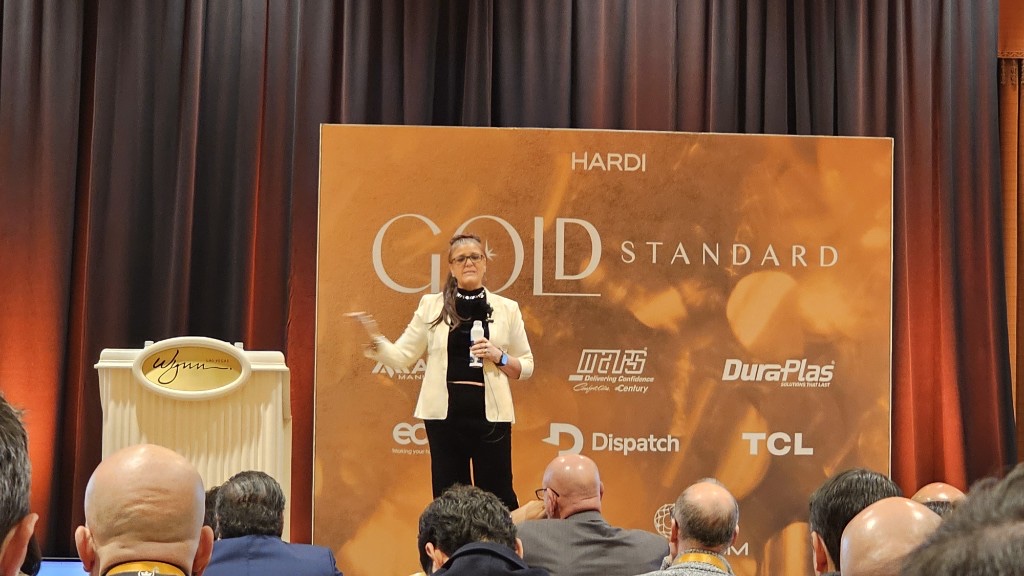
In the Field
See the CI Web Group team on site with clients, at industry events, and behind the scenes building the platform that powers the trades.
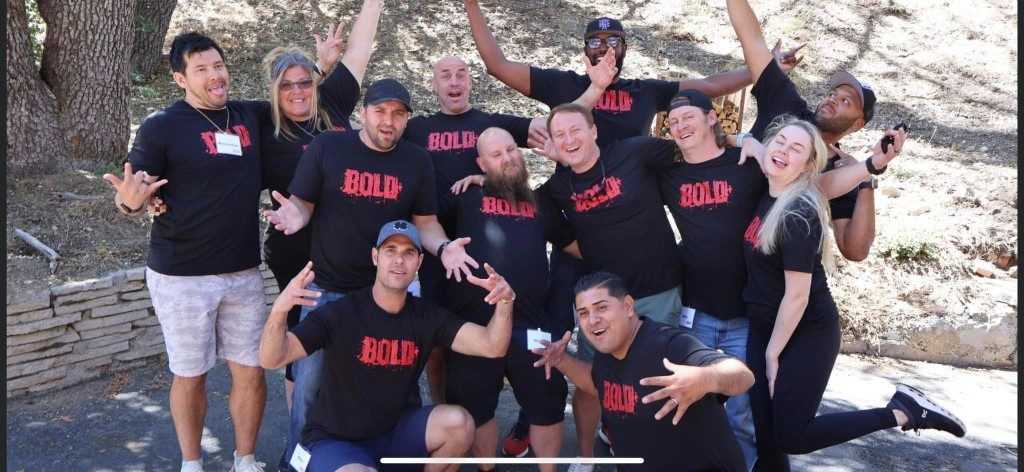
BOLD Graduates
Meet the operators who completed CI Web Group's Business Operator Leadership Development program — the training pipeline that builds the team.
Talk to a senior operator.
Every CI Web Group account talks to senior operators who actually run the platform.
- 30-minute Zoom
- No deck, no pitch
- Strategist, not SDR
- Walk the live dashboard
Start right here on ciwebgroup.com.
Booking and contact requests run through our on-site Get Started journey, so every inquiry lands in one place. Pick a time or tell us what you need there.
Book a strategy callOne journey · strategy to signed plan at /get-started